Same Streets, Different Heroes: How Shinjuku Accidentally Became Anime's Shared Universe
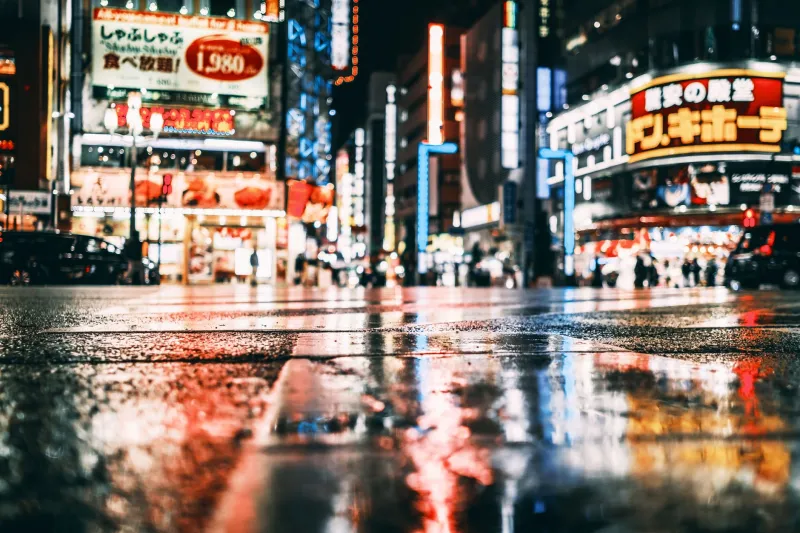
There's a shot you've seen a hundred times without realizing it. A neon-drenched alley, rain-slicked pavement reflecting pink and yellow signage, maybe a vending machine humming in the background. A character walks through it — a demon hunter, a high school delinquent, a time traveler, a broke magical girl. The shows have nothing to do with each other. But the street? It's the same street. It's always Shinjuku.
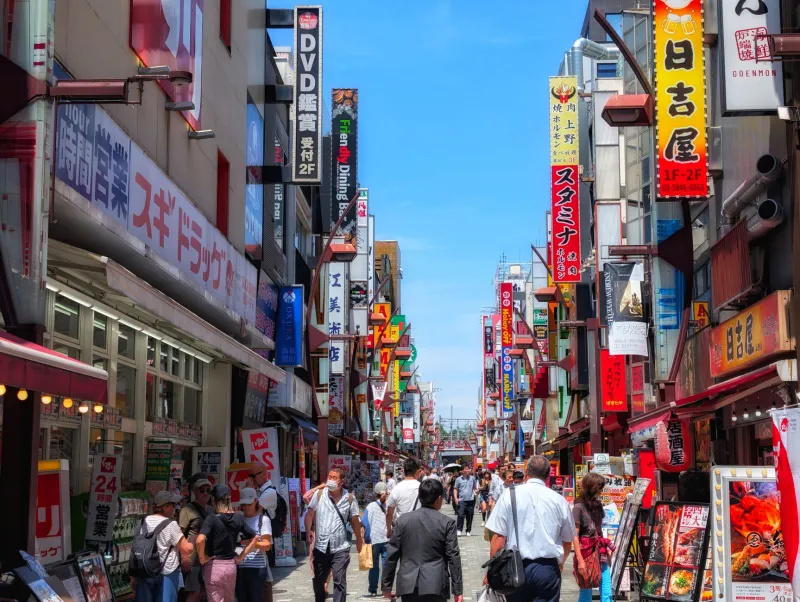
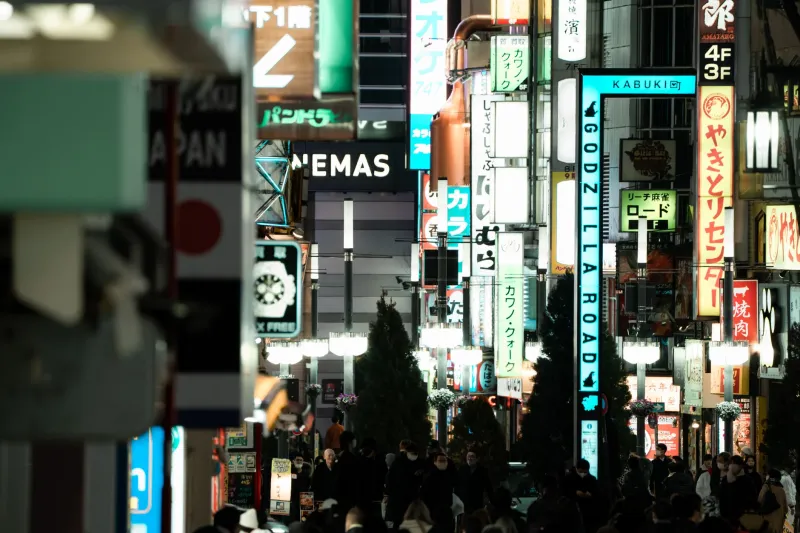
Anime's relationship with Tokyo's most chaotic neighborhood has quietly evolved into something no studio planned and no writer pitched. Multiple unconnected series have independently reached for the same visual shorthand — Kabukicho's lantern-lit corners, the east exit scramble crossing, the looming Godzilla head perched on the Toho Cinema building — and in doing so, stitched together an accidental crossover universe that exists entirely in the minds of fans who noticed the overlap.
The Landmark That Keeps Showing Up
Ask any seasoned anime viewer to name the most recognizable real-world location in the medium, and Shinjuku is going to come up fast. Not because any one show owns it, but because so many shows rent it. Durarara!! built an entire mythology around Ikebukuro — Shinjuku's scrappier neighbor — but even that series couldn't resist pulling in Shinjuku's visual energy for contrast. Tokyo Ghoul used the ward's back alleys as hunting grounds. Sword Art Online: Ordinal Scale staged its augmented reality battles across landmarks that AR-obsessed American fans immediately recognized from Google Maps. Shinjuku Private Eyes, the City Hunter film, leaned so hard into the geography that it functioned as a love letter to every fan who'd ever walked those blocks.
The list doesn't stop there. Monogatari, Madoka Magica's theatrical entries, Fate/strange fake, The Devil Is a Part-Timer! — all of them reach for Shinjuku at some point, in some form. Sometimes it's a full setting. Sometimes it's just a single shot used to communicate "urban chaos" without further explanation. The neighborhood has become a visual vocabulary word that anime writers assume their audience already knows.
Fans Did the Detective Work
Here's where it gets genuinely interesting: the fandom noticed before the industry acknowledged it. Starting around the mid-2010s, location-scouting communities on platforms like Twitter and later Reddit began compiling what they called "anime pilgrimage" maps — GPS coordinates for specific shots matched to specific episodes. What emerged from Shinjuku wasn't a single show's geography. It was a palimpsest. Layer enough shows on top of each other and the neighborhood starts to look less like a setting and more like a character that moonlights across franchises.
Fan-built tourism routes now exist that let you walk the same block and inhabit four or five different anime simultaneously. Stand at the east exit and you're in Durarara!! territory. Walk three minutes south and you've crossed into a Fate battle zone. Turn a corner and there's a ramen shop that appeared in two completely unrelated slice-of-life series within the same year. American fans making their first Japan trips have started using these community-built maps not just as tourism guides, but as a kind of interactive fiction — a way to experience a crossover event that was never officially greenlit.
Why Shinjuku Specifically?
The honest answer is density. No other neighborhood in Japan — and arguably no neighborhood anywhere in the world — packs as much visual contrast into as small a space. You can walk from a luxury hotel lobby to a decades-old standing bar to a kabuki theater to a electronics district in under ten minutes. That compression is crack for animators who need to communicate "this city contains multitudes" without spending twenty episodes on world-building.
There's also the practical reality of reference material. Shinjuku is one of the most photographed urban environments on earth. Street-level photography, Google Street View data, tourist documentation — the neighborhood is essentially pre-built as a reference library for any studio that wants to ground their show in something real. When you're working on a tight production schedule and you need a recognizable urban backdrop fast, Shinjuku delivers.
But the deeper reason might be cultural. Shinjuku carries a specific emotional frequency in Japanese storytelling. It's the place where salarymen drink themselves honest after work, where underground culture has historically survived despite pressure to disappear, where the city's contradictions are most visible and most compressed. When anime wants to gesture at something genuinely urban — not suburban, not rural, not the sanitized version of Tokyo that tourism brochures sell — it reaches for Shinjuku because Shinjuku has earned that weight.
The Accidental Canon
What fans have built around this phenomenon is something close to fan canon — a shared understanding that if your favorite characters all walked through the same Shinjuku alley, they exist in the same universe, even if the studios would never officially confirm it. It's a grassroots mythology, and it's surprisingly durable.
This isn't unique to anime, exactly. Cinematic universes have trained audiences to look for connective tissue between properties. But what's happening with Shinjuku is different because it wasn't manufactured. No franchise bible dictated that these shows would share this geography. The convergence happened organically, driven by independent creative decisions that happened to reach for the same real-world anchor. The fandom just did the work of noticing.
That work matters. It's a reminder that fan communities aren't passive consumers — they're active archivists, pattern-matchers, and in some cases, the people who end up defining what a piece of media actually means over time. The studios didn't create the Shinjuku shared universe. The fans who mapped it did.
A Neighborhood That Earns Its Cameos
The next time you're watching something new and a familiar intersection flickers across the screen — those layered signs, that specific angle on the station entrance — sit with it for a second. You're not just watching a setting. You're watching a neighborhood that has appeared in enough stories to have its own mythology, its own accumulated meaning, its own emotional résumé.
Shinjuku didn't ask to be anime's de facto crossover hub. It just kept showing up, and the medium kept letting it in. At some point, that's not coincidence anymore. That's canon.