When Fandom Becomes Footprint: How Anime Tourism Is Quietly Killing the Spots It Claims to Love
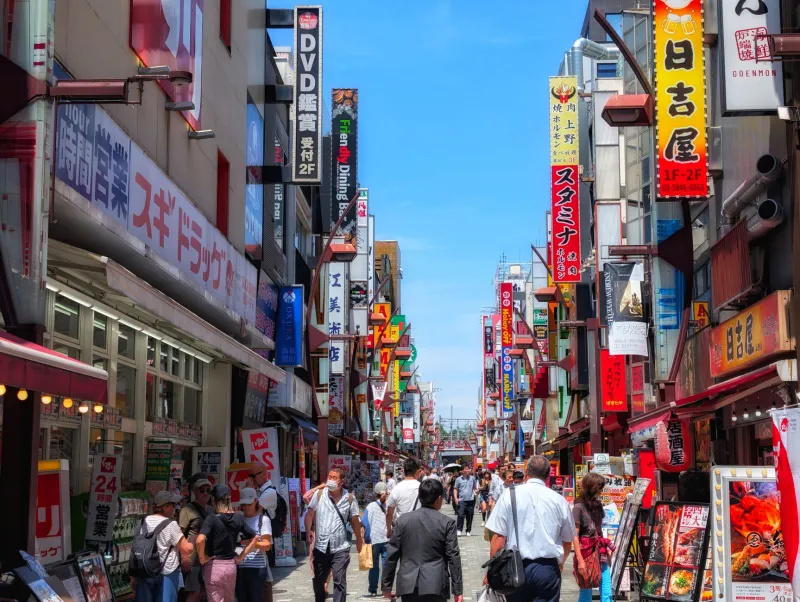
There's a particular kind of joy that comes from standing in a place you've only ever seen animated. The crosswalk looks exactly right. The convenience store sign is in the same corner of the frame. Your phone is already out. You already know the angle.
It's a genuinely cool experience — and it's happening millions of times a year, in neighborhoods across Japan that were not built to absorb it.
Anime tourism, also called seichi junrei (sacred place pilgrimage) in Japan, has exploded over the past decade. What started as a niche habit among dedicated fans — traveling to the real locations that inspired animated series — has become a full-blown industry vertical. Tourism boards are leaning in. Airlines are packaging it. And the neighborhoods at the center of it all? They're starting to fracture.
The Numbers Behind the Phenomenon
Japan's tourism recovery post-pandemic has been staggering. In 2024, the country welcomed record-breaking numbers of international visitors, with a significant and measurable chunk of that traffic driven by pop culture interest. The Japan Tourism Agency has formally acknowledged anime tourism as a priority sector, and prefectural governments from Hokkaido to Okinawa are scrambling to identify which local productions they can claim as their own.
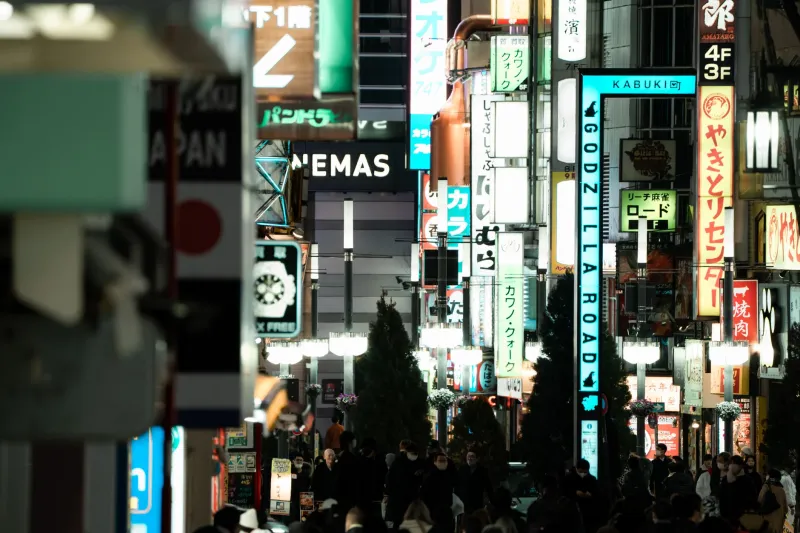
For certain neighborhoods, the attention arrived fast and hit hard. Shimokitazawa, long a haven for Tokyo's indie music and vintage clothing crowd, saw a surge in visitors following its association with specific slice-of-life productions. Yanaka, a historically preserved district in northeast Tokyo, started appearing on pilgrimage maps for fans of quieter, atmospheric series. And Shinjuku — always Shinjuku — remains ground zero for fans chasing everything from Evangelion aesthetics to the specific neon-drenched chaos of a hundred different urban anime backdrops.
The fans showing up aren't doing anything wrong, exactly. But collectively, they're doing a lot.
What "A Lot" Actually Looks Like on the Ground
Talk to people who actually live in or run businesses in high-traffic anime pilgrimage zones and a pattern emerges fast. It's not usually one dramatic incident. It's accumulation.
A kissaten (traditional Japanese coffee shop) in a neighborhood featured in a popular isekai series reported a years-long shift in its customer base — from regulars who'd been coming for decades to tourists who photographed the exterior, occasionally came in for a single drink, and left. The owner, speaking to a local Japanese outlet that translated the interview for international publication, described it not with anger but with exhaustion. "They love the idea of this place," she said. "But that's different from loving this place."
That distinction matters more than it might seem. The idea of a neighborhood — its animated version, curated and romanticized and frozen in a specific aesthetic moment — is fundamentally different from the living, economically precarious, constantly evolving reality of an actual community. When tourism caters to the former, it tends to reshape the latter in its image. Rents shift. Businesses that served locals get replaced by ones that serve visitors. The thing that made the place interesting starts to disappear under the weight of people coming to see it.
This isn't unique to anime tourism, of course. It's the same dynamic that hollowed out parts of Barcelona, Venice, and New Orleans. But anime tourism carries its own particular wrinkle: the fans often have an intensely specific, emotionally charged vision of what a place should be — one drawn from fiction — and reality has no real chance of living up to it.
The Romanticization Gap
Here's the thing nobody really wants to say out loud in fan communities: the Shinjuku in your favorite anime is not Shinjuku. It's a version of Shinjuku filtered through an artist's memory, compressed into backgrounds, and optimized for narrative atmosphere. The Golden Gai alley that looks impossibly cinematic in a late-night drama arc is also, in real life, a tight cluster of tiny bars where regulars have been drinking with the same proprietors for thirty years. The "vibe" wasn't manufactured for you. It accrued.
When fans arrive expecting the animated version and encounter the lived one — noisier, messier, less picturesque, populated by people who aren't extras in someone else's story — there's sometimes disappointment. And when tourism infrastructure starts bending toward that disappointment, trying to deliver a more "accurate" (read: curated) version of the fantasy, the authenticity that attracted people in the first place quietly exits through the back.
Some areas have started pushing back in small ways. Certain pilgrimage-heavy spots in the Kyoto area have posted signage discouraging photography near residential streets. A handful of businesses in anime-adjacent Tokyo neighborhoods have quietly declined to participate in official pilgrimage map programs. It's not a movement yet. But it's a signal.
Is There a Better Way to Do This?
Fans aren't the villains here, and framing it that way misses the point. The desire to connect physically with something that moved you emotionally is genuinely human. The impulse that sends a Kiki's Delivery Service fan to the Swedish-inspired architecture of Gotland is the same one that sends a Steinbeck reader to Salinas, California. There's nothing wrong with it in the abstract.
What's worth interrogating is the scale and the structure. When tourism boards treat pilgrimage sites purely as content — photo opportunities, check-in locations, hashtag fuel — without thinking about what that volume of attention does to actual communities, they're extracting value from a place without reinvesting in it.
Some researchers studying overtourism in Japan have suggested models that distribute visitor traffic more deliberately — spreading pilgrimage maps across more locations, highlighting lesser-known sites, and building in community benefit mechanisms so that local businesses and residents see tangible upside from the attention. A few regional tourism initiatives have experimented with this. The results are mixed but not discouraging.
For individual fans, the calculus is simpler, even if it's harder to act on: go slower. Spend money at the local spots, not just the famous ones. Talk to people. Accept that the place you came to see is not the place in the show, and let that be interesting rather than disappointing. The gap between the animated version and the real one is where the actual story lives.
The Love That Leaves Marks
We named this site after Shinjuku for a reason. It's a place that means something — to anime fans, to Japanese pop culture, to the broader story of how a city can become a living aesthetic. That meaning is real.
But meaning isn't indestructible. It can be worn down by foot traffic and rent increases and the slow replacement of regulars with tourists. The places that inspired the art we love deserve more than to become backdrops for our recreation of it.
Showing up is not the same as showing respect. The fans who understand that difference are the ones who actually leave these places better than they found them — and those are the pilgrims worth being.