From Screen to Street: How Anime Visual Language Took Over Gen Z's Wardrobe
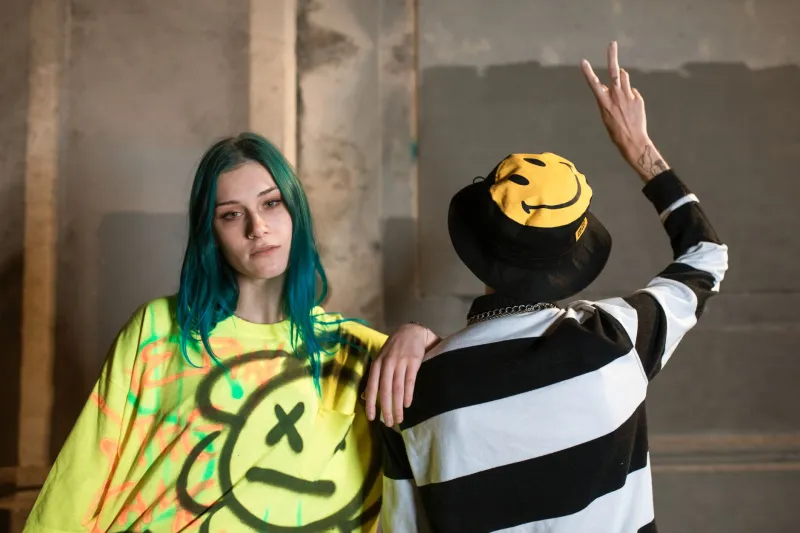
Walk through any major US city on a weekend and you'll catch it everywhere — the cherry blossom pink hoodie, the kanji-embroidered jacket, the oversized silhouette that looks like it was pulled straight from a Shibuya background shot. None of these people are necessarily headed to a convention. They're just getting coffee, hitting a record store, living their lives. And yet, unmistakably, anime is on their backs.
This isn't the old-school Hot Topic era of licensed Dragon Ball Z shirts. What's happening right now is something different — more fluid, more intentional, and way more embedded in how Gen Z actually thinks about personal style. Anime's visual language has stopped being a fandom signal and started being a full-on aesthetic framework. The question worth asking is: how did we get here, and why does it hit so different with this generation?
The Aesthetic Pipeline Nobody Mapped
For years, the pathway from anime fan to anime fashion consumer was pretty linear. You loved a show, you bought the merch, you wore it to express that love. Simple enough. But somewhere around the early 2020s, that pipeline got a serious remix.
Platforms like Pinterest, Tumblr, and later TikTok started circulating anime visuals completely detached from their source material. A frame from Neon Genesis Evangelion became a mood board. A color palette from Sailor Moon became a seasonal aesthetic. Studio Ghibli's soft, painterly backgrounds started showing up as references in indie fashion brand lookbooks — not because the designers were necessarily hardcore fans, but because the visual language itself was doing heavy lifting.
This is the part that's easy to miss: anime has always had an extraordinarily developed visual vocabulary. Color doesn't just set a mood in anime — it communicates character, emotional state, thematic weight. The way a character is silhouetted against a sunset means something specific. The deliberate clash of pastel and neon in a scene isn't accidental. Designers — even ones who couldn't name a single arc of Bleach — have been responding to that sophistication without always knowing where it came from.
Streetwear Picked Up the Signal First
The streetwear world was early to this. Brands like Uniqlo (with its long-running UT graphic line) built an entire bridge between anime IP and fashion-forward consumers, but the more interesting story is what happened at the indie and mid-tier level.
Designers on platforms like Etsy and Depop started building entire brand identities around specific anime aesthetics — not characters, not logos, but vibes. Think washed-out greens and browns that feel like a Mushishi forest scene. Think structured, oversized coats with interior linings printed in patterns that read like shojo manga backgrounds. Think embroidery work that references magical girl transformation sequences without ever putting a character on the fabric.
This is where it gets genuinely interesting from a design perspective. These creators aren't selling anime to anime fans — they're translating anime's visual intelligence into something a Gen Z consumer who maybe only knows Spirited Away can still connect with emotionally. The aesthetic resonates even when the source is invisible.
Larger collaborations have started to catch on too. Supreme's anime-adjacent graphics, Levi's limited drops with Evangelion, New Era caps with Naruto embroidery — these aren't fringe anymore. They sell out. Fast.
Why Gen Z Specifically?
Older millennials grew up with anime as a subcultural marker — something you hid from the wrong crowd or wore as a badge of niche pride. Gen Z came up in a completely different context. For them, anime was already mainstream by the time they hit middle school. Attack on Titan was a school hallway conversation. Demon Slayer broke Funimation streaming records. Jujutsu Kaisen had its own dedicated corner of TikTok before half the fanbase had finished the first season.
When a cultural product is that normalized, it stops being a subcultural identity marker and starts becoming raw aesthetic material — something you remix, reference, and integrate into your broader personal style without it needing to mean "I am an anime fan" to everyone around you.
Gen Z also grew up in an era of intense visual literacy. They consume more images per day than any previous generation, and they're genuinely good at reading visual language. The intentionality in anime's design — the way Cowboy Bebop's jazz-era color palette communicates a whole emotional register, or the way Madoka Magica weaponizes pastel aesthetics against its own genre — that kind of sophistication lands differently with people who've been processing visual media at high speed their entire lives.
They recognize craft even when they can't name it.
The Indie Designer Angle
Some of the most compelling work happening right now is coming from designers who are explicit about their anime influences in a way previous generations weren't. Brands like Cactus Plant Flea Market — while not strictly anime-coded — have a silhouette and graphic sensibility that shares obvious DNA with streetwear-inflected anime aesthetics. Meanwhile, smaller operations run by actual fans are building serious followings by being completely transparent about their references.
A designer running a small label out of LA recently described her process to an industry podcast as "basically making clothes for the version of myself that lives inside a slice-of-life anime" — and that framing is telling. It's not about replication. It's about translation. The goal is to capture the emotional register of a specific visual world and make it wearable in actual American life.
That's a sophisticated creative brief, and the fact that there's a real market for it says something important about how deeply anime's visual culture has embedded itself in Gen Z's imagination.
What This Means for the Industry
Anime studios and IP holders are slowly catching on, but honestly, they're still mostly playing catch-up. The official merch pipeline — the Crunchyroll store, the convention exclusives, the licensed streetwear drops — tends to be reactive rather than forward-thinking. By the time an official collab drops, the aesthetic moment it's trying to capture has often already moved.
The fans and indie designers are faster, more attuned, and frankly more interesting. They're not waiting for a license. They're building a visual culture in real time, pulling from decades of anime's design history and feeding it back out through contemporary fashion.
For anyone paying attention to where youth culture is heading, this is the story. Anime didn't just conquer streaming. It's reshaping how a generation dresses, what they consider beautiful, and what kind of visual language feels emotionally true. That's not merch. That's cultural infrastructure.
And it's only getting louder.