Ground Zero for Greatness: Why Shinjuku Became the Beating Heart of Anime Production
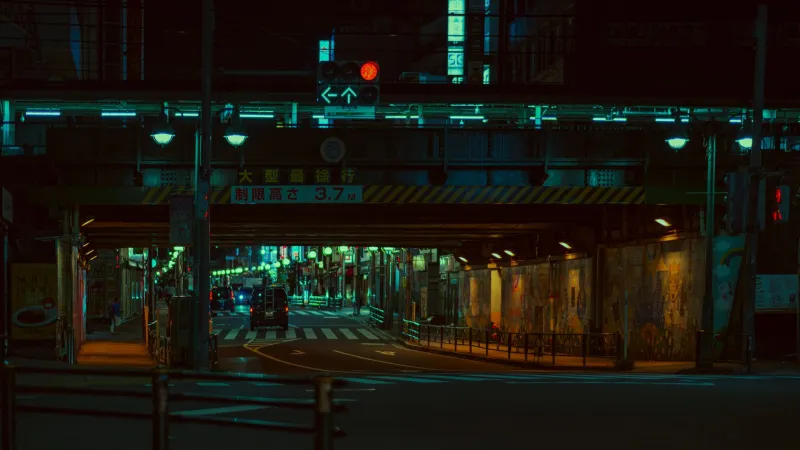
Here's a fun thing to think about the next time you're deep in a rewatch of Evangelion or hunting down a vintage Madhouse title from the early 2000s: the building where that show was probably made looks nothing like what you'd imagine. No gleaming corporate campus. No Hollywood-style studio lot. More likely, a mid-rise office block wedged between a convenience store and a karaoke joint, somewhere in the sprawling, chaotic, utterly alive geography of Shinjuku.
That's not an accident. And it's not just a fun trivia detail either. The relationship between Shinjuku as a place and anime as an industry is one of those stories that doesn't get told enough — partly because it's messy and complicated, and partly because it requires treating a neighborhood as more than just scenery.
So let's actually tell it.
The Post-War Foundation Nobody Talks About
To understand why Shinjuku became what it became for anime, you have to go back further than most fans bother. Post-war Tokyo was being rebuilt in real time during the late 1940s and 1950s, and Shinjuku — already a major transit hub thanks to its massive train station — became a magnet for the kind of small-scale creative businesses that couldn't afford Ginza or Shibuya real estate. Publishers, illustrators, print shops, advertising agencies: they all clustered here because the rent was survivable and the infrastructure was already there.
When the first wave of commercial animation studios started forming in the late 1950s and early 1960s, they plugged directly into that existing creative ecosystem. Mushi Production, Osamu Tezuka's legendary studio, operated in proximity to these networks. The talent pipelines, the freelance illustrators, the background painters who'd cut their teeth doing commercial work — all of it was accessible in ways it simply wasn't in other parts of the city.
Shinjuku didn't create anime. But it created the conditions where anime could grow fast.
Real Estate Economics and the Cluster Effect
Here's something that doesn't get discussed enough in fan circles: the reason studios stayed in Shinjuku wasn't always artistic. A lot of it was just... rent math.
Anime production in Japan runs on a subcontractor model that requires a dense web of smaller companies — studios handling backgrounds, others handling in-between animation, sound production houses, licensing offices — all needing to be in regular physical contact. Before digital file transfer was seamless, proximity was literally a competitive advantage. A key animator could hand-deliver a stack of cels to a background studio three blocks away. A director could walk over to a sound studio for a quick check on a scratch track.
Shinjuku's mix of mid-tier commercial real estate, transit accessibility (that station connects to what feels like half of Tokyo), and established density of creative businesses made it the logical anchor for this kind of clustered production model. Once enough studios were there, it made financial sense for new studios to locate nearby. The cluster fed itself.
This is actually a pattern urban economists recognize across creative industries worldwide — think Nashville for country music, or how Hollywood's physical geography shaped the early film industry. Shinjuku just happened to be Tokyo's version of that gravitational pull for animation.
The Culture That Came With the Zip Code
But let's not make this purely transactional, because that misses something real. Shinjuku has always had an energy that's hard to quantify but impossible to ignore. Kabukicho's controlled chaos. The Golden Gai bar district where writers, filmmakers, and weirdos of every stripe have been drinking elbow-to-elbow since the postwar era. The sense that the city is fully alive here in a way that's different from the manicured calm of somewhere like Minato.
Veterans of the industry — animators and directors who came up through the 1970s and 1980s boom years — have described Shinjuku in terms that sound almost romantic. It was a place where you could work brutal hours, walk out at midnight, and immediately be surrounded by people who were also burning it all down in service of something they cared about. The bars in Golden Gai became informal production meetings. Friendships formed over cheap drinks turned into professional partnerships that shaped entire studios.
That social infrastructure mattered. The anime industry has always run partly on personal relationships and informal networks — knowing who's reliable, who can deliver under pressure, who has a particular visual style that fits a specific project. Shinjuku concentrated those networks in a way that accelerated collaboration and, honestly, accelerated the development of the medium itself.
What Changed — and What Didn't
Modern production realities have obviously shifted things. Digital workflows reduced the need for physical proximity. Rising Shinjuku real estate costs pushed some operations to surrounding neighborhoods or out to places like Nerima, which has its own strong animation history. Globalization brought remote international subcontracting into the picture in ways that would have been unthinkable in the 1970s.
And yet. The gravitational pull hasn't fully dissipated. Key studios, talent agencies, and production companies still maintain meaningful presences in and around Shinjuku. Industry events, screenings, and the informal gatherings that still drive a lot of actual creative decision-making continue to happen here. The neighborhood's identity as an anime industry center is self-reinforcing in ways that pure economics can't fully explain.
There's also the symbolic dimension to consider. For a lot of anime creators, Shinjuku isn't just where the work happens — it's part of the mythology of what they're doing. The district shows up constantly in the work itself: as setting, as inspiration, as a kind of shorthand for urban energy and creative ambition. Durarara!! practically made Ikebukuro (Shinjuku's neighbor and rival) into a character. Countless shows have used Shinjuku's streetscapes as visual vocabulary for everything from romance to apocalypse.
The neighborhood keeps giving back to the art that was born inside it.
Why This Actually Matters to Fans
For US fans especially, it's easy to consume anime in a way that treats Japan as an abstract content factory rather than a place where real people are making real creative decisions inside specific cultural and geographic contexts. The Shinjuku story pushes back against that flattening.
Understanding why Shinjuku became what it became — the economic logic, the cultural texture, the accumulated history of creative people grinding it out in a particular corner of Tokyo — makes the work itself feel more grounded. It adds a layer of meaning to the shows we love that goes beyond plot and character.
We named this site Shinjuku Sentai for a reason. The name isn't just a cool-sounding Japanese phrase. It's a nod to the actual place where so much of what we celebrate here was built, argued over, animated frame by frame, and sent out into the world.
That neighborhood earned its mythology. And honestly, it's still earning it.