Neon Gospel: How Shinjuku's Chaotic Glow Became the Aesthetic Bible for a Generation
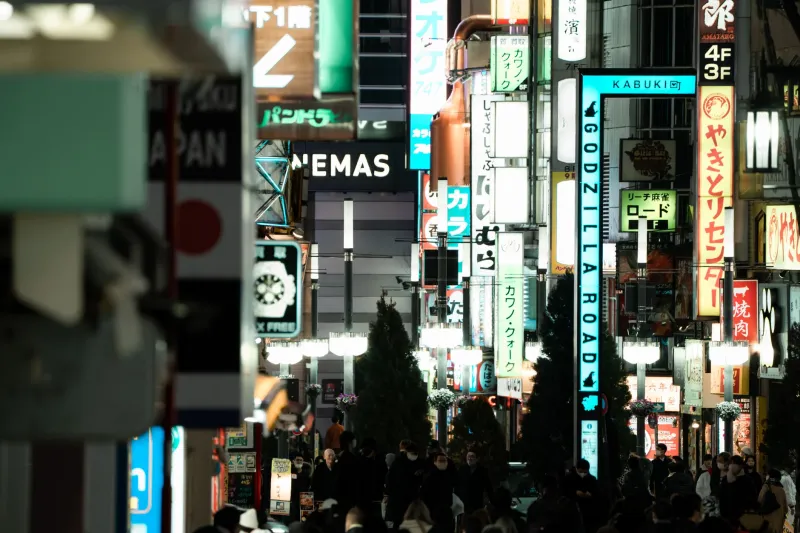
There's a specific kind of image that keeps showing up everywhere right now. Layered neon signs stacked so high they block the sky. Narrow alleys where red lanterns compete with blue LED strips for your attention. Crowds of people moving like water through streets that feel both impossibly dense and weirdly intimate. You've seen it in bedroom Pinterest boards, streetwear lookbooks, lo-fi YouTube thumbnails, and about a thousand different Instagram filters.
What you're looking at — almost certainly — is Shinjuku. Or at least, Shinjuku's ghost haunting the visual imagination of an entire generation.
The Neighborhood That Became a Mood
Shinjuku isn't just a place. If you've spent any real time in anime, you already know this instinctively. It's the backdrop that keeps returning — in Durarara!!, in Tokyo Ghoul, in the rain-soaked alley scenes of a hundred action series where something important is about to happen. It's the neighborhood that anime used so often, so lovingly, and with such specific detail that it stopped being a setting and became a feeling.
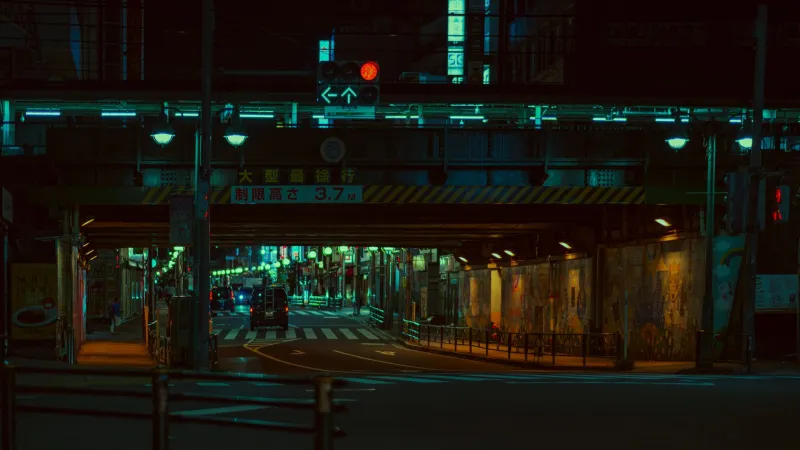
That feeling has a recipe: sensory overload that somehow still feels navigable. Architecture that grows upward because there's no room to grow outward. Light sources competing for dominance at every level of the frame. And underneath it all, a street-level energy that's chaotic but not hostile — a city that's busy being itself and inviting you to keep up.
Anime studios didn't invent this aesthetic. They documented it, then amplified it, then sent it out into the world through decades of serialized storytelling. And somewhere along the way, Western audiences absorbed it so deeply that they started producing it themselves — without always knowing where it came from.
When a Place Becomes a Template
Here's what's genuinely interesting about the Shinjuku effect: it works on people who have never watched a single frame of anime. The aesthetic has traveled far enough that it now exists independently of its source material.
Go look at the "cyberpunk room" or "neon aesthetic" tags on TikTok right now. You'll find American teenagers in Ohio and Texas who have covered their walls in Japanese-style signage, hung neon light strips in configurations that echo the vertical signage towers of Kabukicho, and styled their outfits around a color palette — deep navy, electric pink, acid yellow, reflective black — that maps almost perfectly onto a Shinjuku street at midnight.
Ask them where the inspiration came from and you'll get a mix of answers. Some will cite Cyberpunk 2077. Some will mention Blade Runner. Some will just say "I don't know, it just looks cool." Very few will say "Shinjuku, specifically." But the lineage is there if you trace it.
Blade Runner lifted heavily from Tokyo. Cyberpunk 2077's Night City is saturated with Japanese urban visual language. And both of those drew from a well that anime had been pulling from — and popularizing — for decades before either of them existed.
The Vertical Logic of Shinjuku's Visual Appeal
One thing that separates Shinjuku's aesthetic from generic "city at night" imagery is its verticality. Western cities tend to spread outward. American downtowns have tall buildings, sure, but the street-level experience is often sparse — wide sidewalks, parking lots, distance between storefronts.
Shinjuku does the opposite. Signage climbs. Buildings stack functions on top of each other in ways that feel almost geological — a ramen shop on the second floor, a bar on the fourth, a nail salon on the sixth, all announced by signs that overlap and compete in the same vertical column of space. The result is a visual density that reads as alive in a way that a lot of American streetscapes simply don't.
Gen Z, raised on infinite-scroll feeds and multi-tab browsing, is wired for exactly this kind of layered visual input. The Shinjuku aesthetic isn't overwhelming to them — it's stimulating in exactly the right way. It rewards looking. There's always something else to find in the frame.
This is also why it translates so well to social media. A photo taken in Shinjuku — or designed to evoke Shinjuku — is inherently scroll-stopping because it contains multitudes. It's a composition that doesn't give you everything at first glance.
Interior Design, Fashion, and the Bedroom as Cityscape
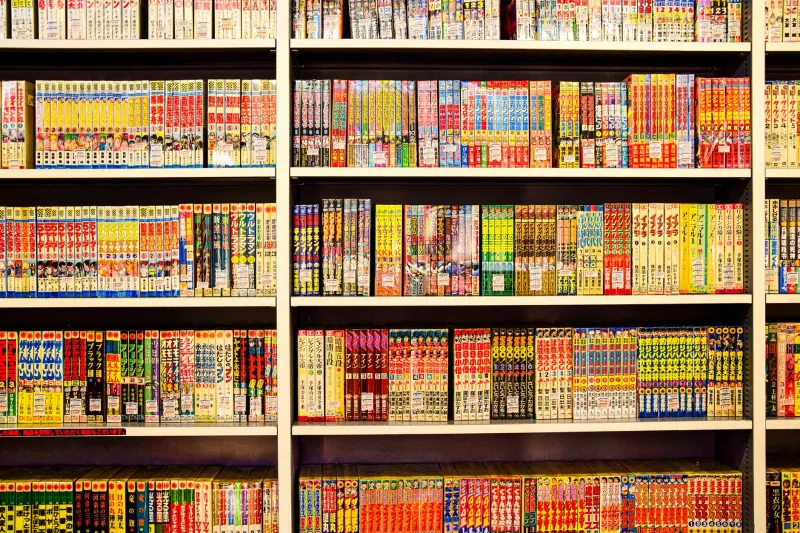
The most direct evidence of Shinjuku's reach into American daily life is in how Gen Z is designing their personal spaces. The "aesthetic bedroom" trend — heavily documented on YouTube, TikTok, and Reddit — has produced a remarkably consistent visual template: neon signs (often in English but styled after Japanese katakana lettering), dark walls, layered artificial lighting, figures and collectibles displayed like urban shrines, and a general sense of intentional sensory density.
This is Shinjuku logic applied to a 10x12 room in suburban America. It's the same impulse: take a confined space and make it feel electric. Fill every layer of it with light and meaning. Make it feel like something is always happening.
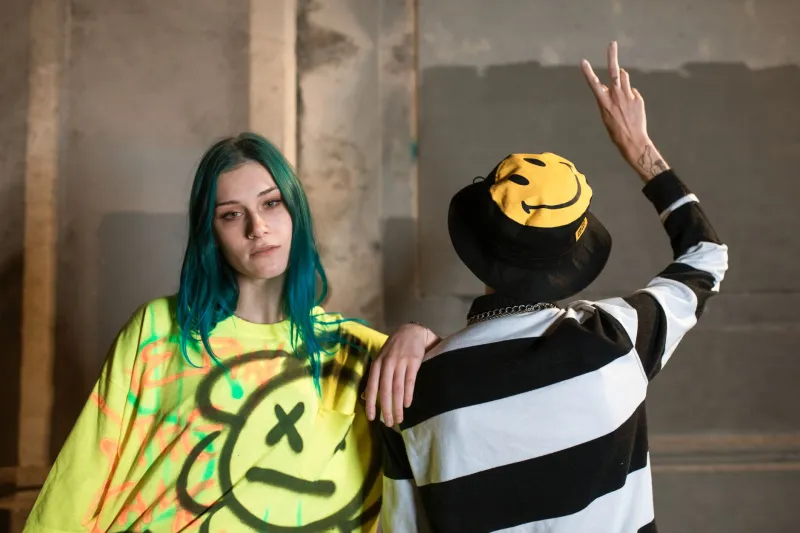
Fashion has followed a similar path. Brands like BAPE, Neighborhood, and Wacko Maria — all rooted in Japanese street culture with heavy Shinjuku-adjacent DNA — have gone from niche imports to mainstream hypewear. Collaborations between Japanese streetwear labels and American brands have normalized the visual vocabulary: bold graphics, layered textures, a color sensibility that owes a lot to the way Shinjuku looks at 11pm.
Even the resurgence of Y2K fashion has a Shinjuku thread running through it. The early 2000s were peak anime-crossover-into-Western-pop-culture territory, and the visual memories of that era — which Gen Z is now mining for aesthetic inspiration — are soaked in the neon-and-chaos palette that Shinjuku made iconic.
A Cultural Export That Doesn't Need a Label
What makes the Shinjuku effect genuinely remarkable is that it operates without branding. Nobody is running a "Visit Shinjuku" campaign targeted at American teenagers. There's no official cultural export program pushing this aesthetic into Western consciousness.
It traveled through anime. Through games. Through music videos and fashion lookbooks and the accumulated weight of a million tiny references that built up over decades until the aesthetic became ambient — part of the visual air that Gen Z breathes without thinking about it.
For fans who are plugged into anime and tokusatsu, there's something quietly satisfying about watching this happen. The neighborhood that served as backdrop for so many of the stories we love has become a cultural touchstone for people who might not even know what Shinjuku means. The aesthetic won, even if the origin story didn't come with it.
Maybe that's fine. Culture moves like that sometimes — the source diffuses, the feeling spreads, and eventually something becomes universal enough that it belongs to everyone. Shinjuku's neon gospel has been preached so widely that the congregation doesn't need to know the name of the church.
But for those of us who do know? There's something kind of wonderful about seeing a kid in Atlanta deck out their room in kanji neon signs and not realizing they've built a tiny shrine to a neighborhood in Tokyo that's been quietly running the aesthetic game for decades.