The Map Lied to You: How Anime Builds 'Real' Places That Were Never Actually There
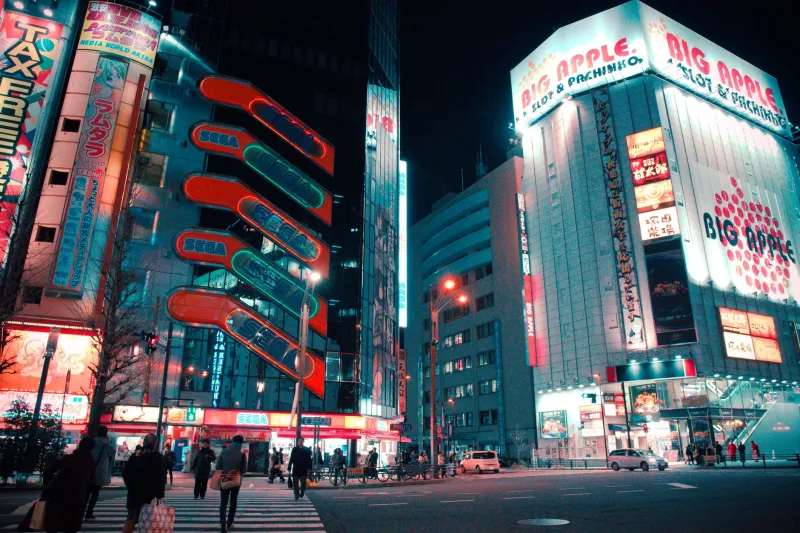
You've seen the TikToks. A fan stands at a crosswalk in Shinjuku, holds up a screenshot from their favorite show, and the backgrounds line up almost perfectly. The comments go wild. People start booking flights. It's a whole thing.
But here's what nobody talks about in those videos: the word almost.
Anime has a complicated, quietly deliberate relationship with real geography. Studios pull from actual Tokyo neighborhoods constantly — the textures, the signage, the density of it all. But what ends up on screen is rarely a straight reproduction. It's a remix. A construction. Sometimes it's an outright invention dressed up in enough real-world detail to feel like a place you could actually visit.
And fans, bless them, keep showing up to find it anyway.
Location Scouting Isn't the Same as Location Accuracy
Here's something worth understanding about how anime production actually works: location scouting is a real part of the process, especially at studios with serious production values. Background artists and directors will walk neighborhoods, take reference photos, study the way afternoon light hits a particular alley or how a train overpass frames the skyline. That research is genuine.
But the goal of that research is almost never to recreate a place with documentary precision. It's to absorb a place. To extract its feeling. The actual drawings that come out of that process are filtered through artistic choices, storytelling needs, and sometimes straight-up practical limitations.
A real Shinjuku intersection might have too much visual noise to read clearly on a 24-inch TV. So the animator simplifies it — removes a few signs, shifts the angle, cleans up the sightlines. Now it looks like Shinjuku, it feels like Shinjuku, but it's not actually any specific block you could pin on a map.
That gap between reference and result is where the myth gets made.
The Composite City Problem
Tokyo is enormous and wildly varied, which makes it an incredible resource for anime production — and also makes it easy to pull from multiple real locations to construct a single fictional one.
A show might use the architecture of one Shinjuku block, the vibe of a Golden Gai alleyway, the train infrastructure of a completely different ward, and a rooftop view that doesn't actually exist from any of those angles. Stack those elements together and you get something that feels hyper-real to anyone who's spent time in Tokyo, but that no single location can claim.
This is especially common in romance anime, where the "town" the characters live in often reads as a greatest-hits collection of atmospheric Japanese urban environments rather than any coherent real place. Fans identify the components correctly — yes, that's clearly inspired by Shimokitazawa, yes that bridge is definitely based on something in Setagaya — but the assembled whole is fictional.
The problem is that online fan communities treat component identification as destination confirmation. "I found the bridge!" becomes "I found the town!" and suddenly people are showing up to a real bridge in a real ward expecting to feel the full emotional weight of a place that was never geographically whole.
When Studios Deliberately Obscure
Some of the blurring isn't accidental. There's a real tradition in anime of studios softening or outright hiding specific real-world locations, particularly when those locations are residential or when the production team anticipates fan tourism could become a nuisance.
This became a bigger conversation after a wave of anime tourism in the 2010s led to genuine disruption in the communities being depicted — overcrowded streets, trespassing on private property, noise complaints from fans trying to recreate shots at 6 AM. Some studios started quietly adjusting their backgrounds to be suggestive of a place rather than precise enough to GPS-locate.
It's a weird artistic compromise: make the setting feel real enough to be emotionally resonant, but vague enough that you can't actually find the front door.
Other studios go the opposite direction and lean hard into specificity as a promotional strategy, essentially using real Tokyo landmarks as free advertising. Those shows tend to produce the most successful pilgrimage tourism — Your Name being the obvious peak example — but they're also the ones where the real location has to absorb the most fan traffic.
The Invented Neighborhood That Feels More Real Than Real
Some of the most beloved "locations" in anime history are complete fabrications that have taken on a life entirely their own. Neighborhoods that exist only in the frame, streets that were drawn from imagination but rendered with enough detail to feel like you could smell the ramen shops.
There's something genuinely interesting about what happens psychologically when animation does this well. The human brain doesn't really distinguish between a vivid memory of a place you visited and a vivid memory of a place you watched intensely for 24 episodes. The emotional imprint is similar. So fans develop real attachment to fictional geography — and then experience a specific kind of grief when they realize the place they love doesn't have a physical address.
Some fans have described the experience of arriving in Tokyo expecting to find an anime's setting as a kind of uncanny valley tourism: everything is close, the atmosphere is right, but the exact corner never materializes. You're always almost there.
Why It Doesn't Actually Matter (And Why It Totally Does)
Here's the honest take: the artistic choice to composite, obscure, or invent locations is usually the right one. Anime isn't a travel documentary. A story set in a recognizable city doesn't owe that city perfect cartographic fidelity. The emotional truth of a place matters more than its GPS coordinates, and animators are artists making choices, not surveyors making maps.
But the fan experience of this reality is genuinely complicated, especially for American fans who've spent years building up a mental image of Tokyo through anime before ever having the chance to visit. There's a specific kind of disappointment that comes from arriving in a city you feel like you already know and discovering that the version you know was always a little bit made up.
The better frame, maybe, is to think of anime's Tokyo the way you'd think of a great novel's New York or a prestige TV show's Baltimore. Real enough to feel true. Fictionalized enough to serve the story. A place that exists fully only in the work itself.
The map was always part of the art. You just have to stop trying to print it out and follow it.