The Great Unmooring: What Happens to Anime When Tokyo Stops Being the Center of Everything
There's a version of the anime industry that most fans picture when they imagine where their favorite shows come from: cramped studio floors somewhere in Tokyo, walls covered in storyboards, animators hunched over light tables at 2 a.m. while vending machine coffee keeps them vertical. It's a romantic image, and it's not entirely wrong. But it's getting less accurate every year.
Something is shifting. Quietly, incrementally, and with very little fanfare, anime's creative infrastructure is starting to loosen its grip on Tokyo. Studios are reassessing their footprints. Freelancers are packing up and moving to cities where rent doesn't consume half a paycheck. And the tools that once demanded physical proximity — shared servers, in-person direction sessions, paper-based production pipelines — are being replaced by cloud-based workflows that don't care what prefecture you're in.
The big question isn't whether this is happening. It clearly is. The question is what it actually means for the anime you watch.
Why Tokyo Got So Hard to Afford
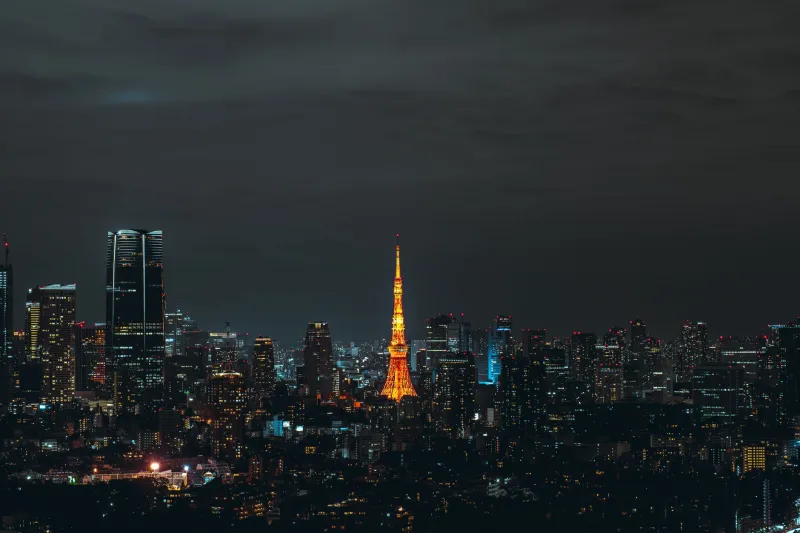
Let's back up. Tokyo's dominance in anime production wasn't accidental — it was structural. The industry's infrastructure, its talent pipelines, its publisher relationships, its voice recording studios, its broadcast networks: all of it concentrated in the capital over decades, creating a feedback loop where you had to be in Tokyo to be taken seriously, and being in Tokyo made you better connected, which reinforced the need to be there.
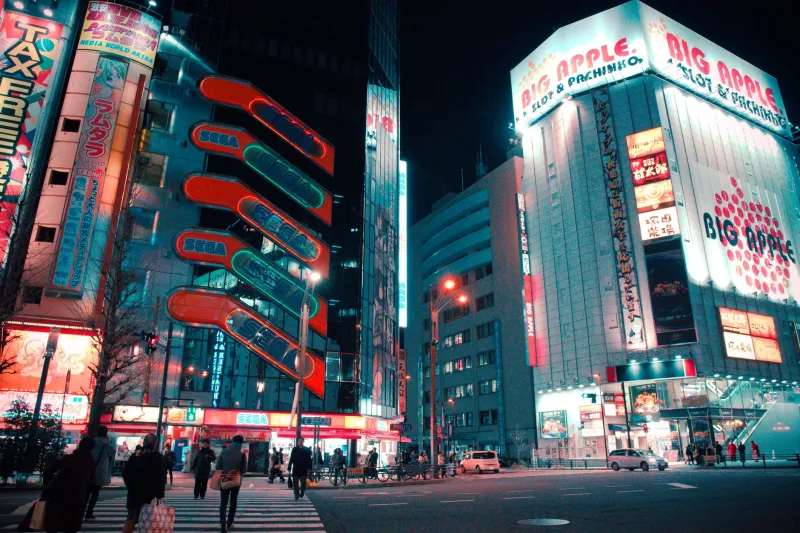
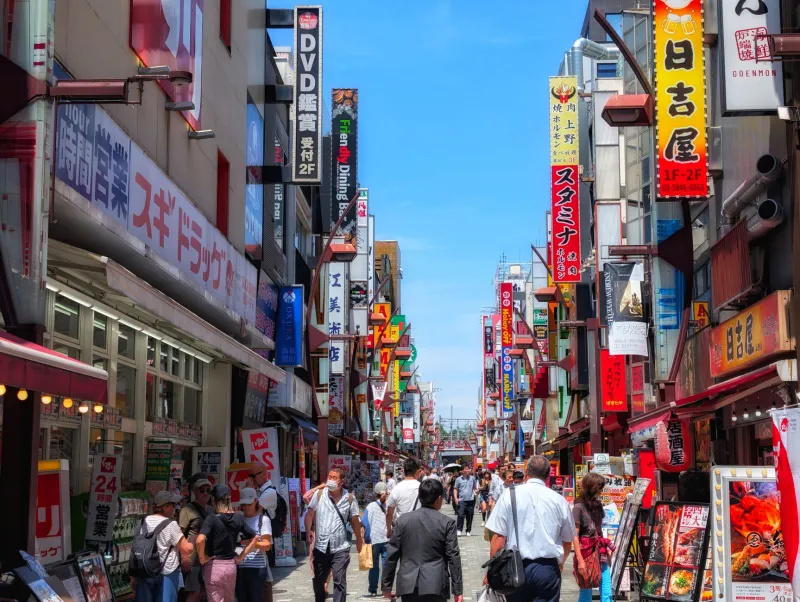
Shinjuku specifically became a kind of creative nerve center — home to major studios, production companies, and the dense web of freelance talent that keeps the whole machine running. We've written about this before. The neighborhood didn't just host anime; it shaped it.
But Tokyo real estate has never been cheap, and it's gotten considerably less affordable over the past decade. Studio floor space is expensive. Staff housing is expensive. The cost of keeping a full-time, in-house animation team in central Tokyo has become a genuine financial burden, especially for mid-tier studios that don't have a mega-hit franchise subsidizing the overhead. Some studios have responded by shrinking their physical footprint. Others have started experimenting with something more radical: leaving altogether.
Where People Are Actually Going
The destinations vary, but a few cities keep coming up in conversations with people inside the industry. Kyoto has long had a creative scene — it's not exactly undiscovered — but it's attracting a new wave of animation professionals who want lower costs without sacrificing cultural infrastructure. Fukuoka, in Kyushu, has been aggressively courting creative industries for years and has the quality of life to back it up. Sapporo, up in Hokkaido, is another name that surfaces, particularly among younger animators who grew up there and never saw a compelling reason to uproot themselves for Tokyo.
None of these cities are replacing Tokyo. That's not really the point. What's happening is more like a diffusion — talent and small studios spreading out, maintaining connections to the Tokyo-based production committees and publishers that still hold a lot of the industry's financial power, but doing the actual work somewhere else.
Remote production tools made this possible in ways that simply weren't available ten years ago. Digital animation workflows, cloud-based asset management, video direction sessions — the pandemic essentially ran a forced experiment in whether anime could be made without everyone being in the same room. The answer turned out to be a qualified yes. Not perfectly, not without friction, but workably enough that a lot of people looked at their Tokyo rent and started doing the math differently.
What the Industry Stands to Gain
Here's the optimistic read on all of this: decentralization could genuinely democratize who gets to make anime.
For a long time, breaking into the industry as an animator or director meant either being born in Tokyo or being willing to move there on a junior animator's salary, which is notoriously brutal. The economics of that equation pushed out a lot of talented people who simply couldn't afford the transition. If the work can happen anywhere, the talent pool gets bigger. Creators from Osaka, from Sendai, from smaller cities that never had a foothold in anime production might find paths into the industry that didn't exist before.
There's also a creative argument here. Tokyo's dominance meant that a huge proportion of anime was being made by people who shared similar urban experiences, similar commutes, similar neighborhood aesthetics. Bring in creators who grew up somewhere else — coastal towns, mountain regions, rural prefectures — and you might start seeing that reflected in the stories being told and the visual worlds being built. Anime has always drawn on the places its creators inhabit. Widening that geography could genuinely widen the range of what gets made.
What Gets Lost in the Scatter
But there's a less rosy version of this story, and it's worth taking seriously.
A lot of what makes the anime industry function is informal. It's the conversation between a director and a key animator that happens because they ran into each other in the hallway. It's the mentorship relationship that develops because a junior animator is physically present to watch how a senior handles a difficult cut. It's the accumulated institutional knowledge that lives in a studio's culture, not in any document or Slack channel.
When you scatter that across multiple cities and time zones, some of it evaporates. The anime industry already has serious concerns about knowledge transfer — veteran animators aging out without enough successors trained to replace them. Remote work doesn't obviously solve that problem. In some ways, it might make it harder.
There's also the question of creative coherence. Big productions involve dozens of people whose work has to feel unified. Physical proximity helps with that in ways that are genuinely difficult to replicate digitally. Some directors have been vocal about their skepticism — not about remote work in general, but about whether it can sustain the kind of intensive collaborative back-and-forth that distinguishes good anime from competent anime.
Shinjuku Isn't Going Anywhere — But It's Sharing the Stage
None of this means Tokyo is done. The publishers are still there. The major production committees are still there. The voice recording infrastructure is still largely concentrated in the capital. For the foreseeable future, Tokyo remains the financial and contractual hub of the anime industry even if it's no longer the exclusive place where the creative work gets done.
What's changing is the relationship between where the money is and where the art is made. Those two things used to be in the same building, sometimes literally. Now they're increasingly in different cities, connected by fiber and managed through project software.
For fans watching from the US, the practical impact might be subtle at first. You're not going to see "Made in Fukuoka" in the credits anytime soon. But if this shift continues — and the economic pressures driving it aren't going away — you might eventually notice something different in the texture of what gets made. New visual references. New kinds of stories. Voices from parts of Japan that never had a seat at the production table before.
That's not a guaranteed outcome. But it's a possible one. And honestly, for an industry that's been running some version of the same playbook for a long time, possible is pretty interesting.