One District, a Thousand Stories: How Anime's Shinjuku Fixation Became a Creative Cage
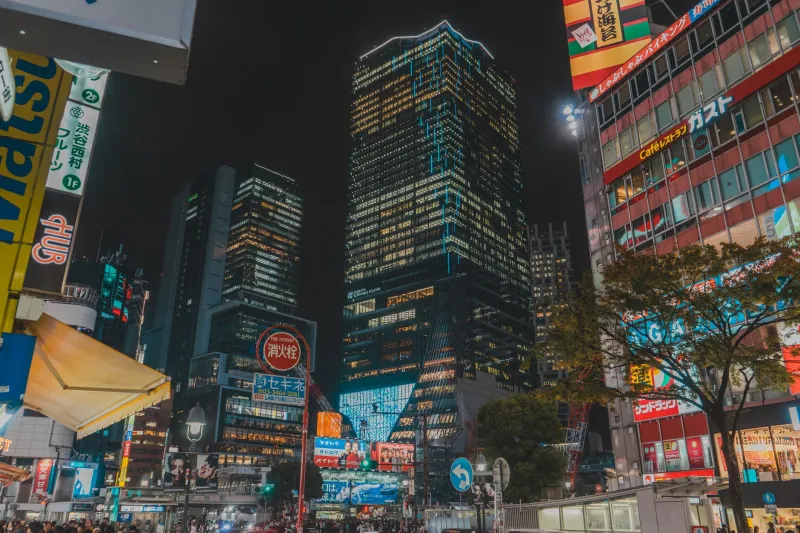
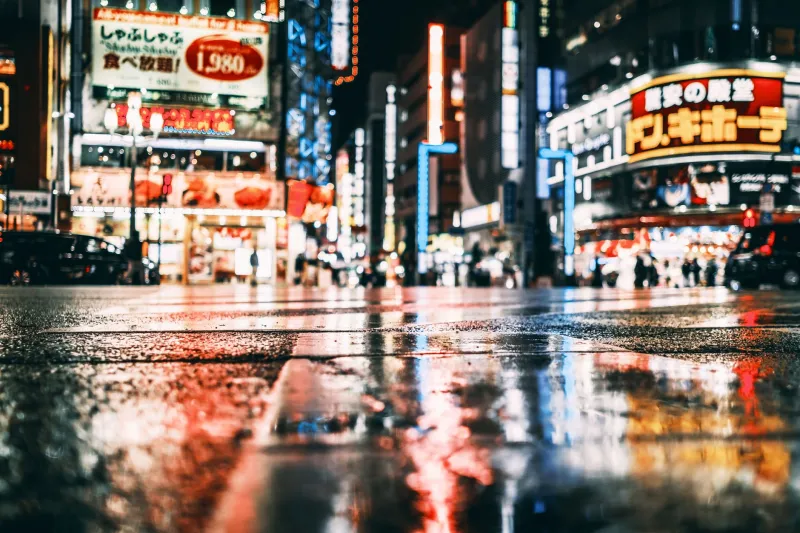
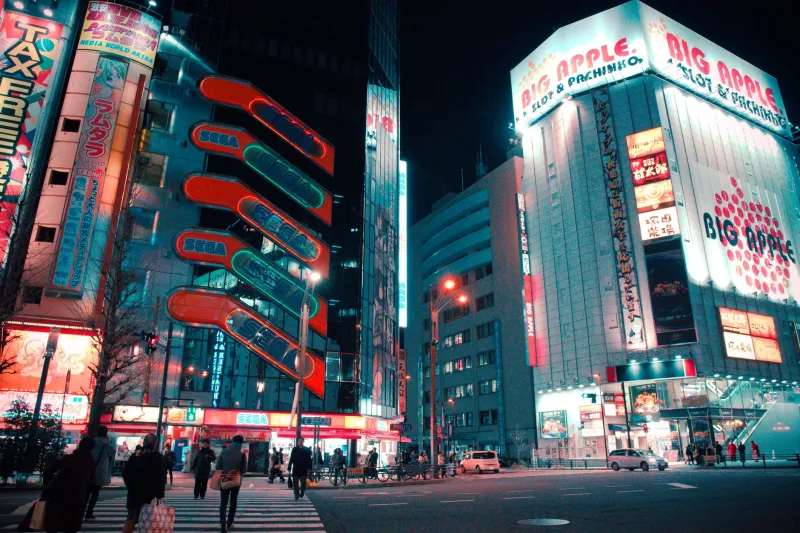
There's a version of this article that celebrates Shinjuku. It writes itself easily — the neon, the density, the way the district pulses like something alive at 2 a.m. on a Tuesday. Anime has always understood that energy, and it's leaned into it hard for decades. But somewhere between Evangelion's apocalyptic reimagining of Tokyo-3 and the forty-seventh isekai protagonist waking up in what is clearly, unmistakably Kabukicho with a fantasy skin coat, something shifted. Shinjuku stopped being a setting and started being a reflex.
And reflexes, by definition, don't require thought.
The Default District Problem
When a location gets used often enough, it stops being a choice. That's the honest way to describe what's happened to Shinjuku in the anime landscape. Production studios, particularly those based in Tokyo, have treated the district as a kind of narrative shorthand — a visual vocabulary that communicates "urban," "modern," "high-stakes," and "Japanese" all at once without requiring any additional exposition.
In isolation, that's smart filmmaking. In aggregate, it's a bottleneck.
The numbers bear this out anecdotally if not statistically. Scroll through any given season's lineup and you'll find Shinjuku's landmarks — the Kabukicho signage, the east exit scramble, the elevated train lines, the claustrophobic backstreets of Golden Gai — appearing in wildly different genres, tones, and stories. A supernatural thriller. A slice-of-life romance. A mecha epic. A psychological horror. The district is infinitely adaptable, sure, but its omnipresence has started to flatten the very diversity it once amplified.
For American fans especially, this creates a strange distortion. Many US viewers encounter Shinjuku through anime before they ever encounter it in real life or travel media. That means the district doesn't just represent Tokyo — it becomes Tokyo, Japan, and by extension the entire cultural context that anime operates within. That's a lot of weight for one neighborhood to carry.
Is This Laziness or a Structural Problem?
It's tempting to frame this as a creative failure, a symptom of studios taking the easy road. But that reading is probably too simple.
The reality is that anime production pipelines are brutally resource-constrained. Background art teams work under timelines that would make most Western animators sweat, and the pressure to deliver visually coherent, geographically legible environments on a compressed schedule pushes studios toward familiar reference material. Shinjuku is exhaustively documented — photographed, mapped, modeled in 3D by enthusiasts and professionals alike. It's easy to render accurately because the source material is everywhere.
Contrast that with, say, Sendai, Nagasaki, or the rural Tohoku coastline. Accurate, expressive depictions of those places require original research, on-location scouting, and the kind of institutional investment that mid-tier productions simply don't have. So they default. Not always out of laziness, but out of survival.
That's a structural problem, not an artistic one — and it's worth naming it as such. The industry's over-reliance on Shinjuku is partly a symptom of how anime gets made under financial and temporal pressure, not just a reflection of storytellers lacking imagination.
What Gets Lost in the Repetition
Here's the thing about saturation: it erodes specificity. When Shinjuku appears in enough different stories with enough different emotional contexts, it stops carrying meaning and starts functioning as wallpaper.
That's a genuine loss. The district has a real history — as a hub of postwar counterculture, as a gathering point for LGBTQ+ communities in Japan, as a place where migrant workers and salary workers and underground artists have coexisted in weird, productive tension for decades. When anime strips all of that away in favor of "cool urban backdrop," it's not just geographically lazy. It's historically careless.
And for fans who are genuinely curious about Japan as a place — not just as an aesthetic — that carelessness matters. The version of Shinjuku that anime has collectively constructed is a simulacrum: recognizable, visually rich, and almost entirely divorced from the lived complexity of the actual district.
The Challengers Are Already Here
The good news — and there is good news — is that the cracks in Shinjuku's dominance are already visible.
A growing number of productions have started doing the harder work of geographic specificity. A Silent Voice planted its story firmly in the Ogaki region of Gifu Prefecture, and the response from fans — including the wave of pilgrimage tourism that followed — proved there's a real appetite for anime that commits to unfamiliar places. Laid-Back Camp turned the Yamanashi countryside into its own kind of character, gorgeous and unhurried in ways that no urban backdrop could replicate. Even within the isekai genre, a few outliers have started building fantasy worlds that feel architecturally distinct from Tokyo's grid.
These aren't flukes. They're signals that audiences are ready for the industry to expand its geographic imagination, and that there's commercial logic in doing so. The anime tourism economy — already worth significant money in Japan — grows most dramatically when a show puts an overlooked place on the map. Shinjuku doesn't need more visitors. Aomori does.
The Irony of the Address
There's something worth sitting with here, especially for a site that literally has Shinjuku in its name: the district's cultural power is real, and it isn't going anywhere. As a symbol of Japanese urban life, as a node in the global imagination of what Tokyo means, Shinjuku has earned its prominence. Dismissing it entirely would be its own kind of overcorrection.
But there's a difference between honoring a place and hiding inside it. Anime has spent decades doing the former, and has gradually slid into the latter. The creative challenge for the next generation of storytellers isn't to abandon Shinjuku — it's to use it deliberately, purposefully, and sparingly enough that when it does appear, it means something again.
Right now, it's everywhere. Which means, in the most important creative sense, it's nowhere.
What Comes Next
The conversation around geographic diversity in anime is still early, but it's real and it's growing. Fans on social media increasingly call out lazy location design. Streaming platforms, hungry for content that stands out in a saturated market, are funding productions with stronger regional identities. And a new generation of Japanese creators — many of whom grew up outside of Tokyo — are bringing different mental maps to their work.
Shinjuku will always be part of anime's DNA. That's not the problem. The problem is when it becomes the only chromosome in the sequence. The industry is starting to figure that out. Whether it moves fast enough to matter is the real question — and the answer is going to show up, frame by frame, in the seasons ahead.