Rubber Suits and Real Stakes: Why Tokusatsu's Handmade Chaos Hits Harder Than Any CGI Blockbuster
There's a specific kind of exhaustion that sets in around the third act of most modern superhero movies. You know the one. The sky opens up, armies of digital soldiers clash against armies of other digital soldiers, buildings crumble in perfectly rendered slow motion, and somehow — despite the undeniable technical achievement on screen — you feel absolutely nothing.
CGI fatigue is real. Film critics have been diagnosing it for years. Audiences have been feeling it even longer. And while Hollywood scrambles to figure out the cure, a genre that's been doing things differently since the 1950s is quietly having its moment.
Welcome to tokusatsu. It's been waiting for you.
What Makes Practical Effects Actually Land
Before getting into why tokusatsu works, it's worth being specific about what "practical effects" actually means in this context — because it's more than just "not CGI."
In tokusatsu productions like Kamen Rider, Super Sentai, and Ultraman, the craft involves monster suit construction, miniature city building, pyrotechnics, wire rigging, and stunt choreography that has to be executed in real physical space. The performers inside those suits are athletes. The miniature cities being destroyed are painstakingly detailed models. The explosions are real explosions.
Here's what that creates, almost automatically: weight. When a Kamen Rider takes a hit, the suit compresses. The performer sells the impact with their whole body. When a kaiju stomps through a model city, the debris flies in ways that are genuinely unpredictable — because physics is unpredictable. You can't keyframe gravity.
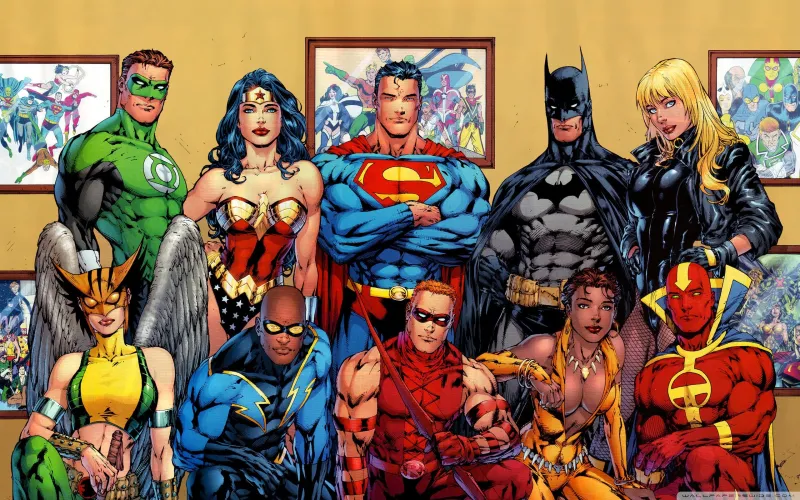
Western audiences raised on Marvel productions have largely forgotten what that feels like. A whole generation of moviegoers has never seen a superhero fight that involves two physical human beings in physical costumes doing physical things to each other in a physical location. Tokusatsu is a reminder that this approach doesn't just work — it works better.
The Suit Builders Are Artists
Spend five minutes watching a behind-the-scenes featurette from a Toei production and you'll come away with a profound respect for the people making these suits happen.
Monster suit design in tokusatsu is an artisan tradition. The sculptors, fabricators, and painters working on Kamen Rider villain designs or Super Sentai mecha are operating in a lineage that stretches back to Eiji Tsuburaya, the effects genius behind the original Ultraman and Godzilla. These aren't prop department afterthoughts. They're central to the production's identity.
Modern suits have evolved significantly — incorporating lightweight materials, improved ventilation systems for performers, and increasingly sophisticated articulation — but the fundamental philosophy hasn't changed. The suit has to look good in motion, under real light, in real environments. There's no fixing it in post.
That constraint, paradoxically, produces better design decisions. When you know the camera is going to be six feet away from your creation and you can't touch it afterward, you build it better from the start.
The Performers Nobody Talks About
Here's a conversation that doesn't happen nearly enough in Western media coverage of tokusatsu: the suit actors.
These are stunt performers who have developed a specific and demanding skill set — performing complex action choreography in heavily restricted costumes, often in extreme heat, communicating character entirely through body language since facial expression is impossible. Performers like Seiji Takaiwa, who has portrayed Kamen Rider's primary hero in suit for decades, are legitimate legends of physical performance.
"People watch the show and see the character," one tokusatsu stunt coordinator explained in a recent interview. "They don't think about the person inside making choices about how that character moves, how they carry themselves, what their body language says about who they are. That performance is as important as anything the face actor does."
For US audiences discovering tokusatsu, this layer of craft is often a genuine revelation. These aren't people in costumes stumbling through choreography. They're athletes executing precise, dangerous, physically demanding work — and they're largely uncredited for it.
Why This Is Landing Now
Timing matters. Tokusatsu's growing Western audience isn't happening in a vacuum — it's happening specifically at a moment when mainstream superhero cinema is facing a credibility crisis.
The Marvel Cinematic Universe, once the gold standard of blockbuster entertainment, has faced significant criticism in recent years over its increasing reliance on unfinished visual effects, weightless action sequences, and a kind of narrative and visual sameness that's worn thin with even dedicated fans. DC's attempts to course-correct have been turbulent. The Transformers franchise has essentially become a cautionary tale.
Into this environment walks a genre that has never abandoned the idea that spectacle should feel dangerous, that fights should have consequences, and that the person doing the action should actually be doing the action.
Younger Western creators are paying attention. Several independent filmmakers in the US have explicitly cited tokusatsu as an influence in their decision to prioritize practical effects — not out of nostalgia, but as a deliberate creative and philosophical choice. When Everything Everywhere All at Once cleaned up at the Oscars with its chaotic, physically grounded action sequences, the Daniels were open about their influences including Asian genre cinema. The throughline exists.
Breaking Through in the West
Specific franchises are doing the heavy lifting right now. Ultraman has found a new global audience through Netflix, with the animated series introducing the mythology to viewers who'd never encountered tokusatsu before. Kamen Rider has developed a dedicated US fanbase through streaming and convention culture, with cosplay representation at events like Anime Expo growing year over year.
Super Sentai — the original series that Power Rangers was adapted from — is increasingly watched directly by American fans who want the uncut, unaltered version of what they grew up with. The realization that Power Rangers was always a translation of something richer and stranger has sent a generation of nostalgic viewers straight to the source material.
The Influence Is Already Flowing Back
Perhaps the most interesting development is how tokusatsu's practical effects philosophy is starting to influence Western productions directly.
Stunt coordinators and second unit directors in Hollywood have increasingly cited the Toei approach as a benchmark for grounded action choreography. The emphasis on performer-driven action — on letting audiences see the human body doing remarkable things — is making a comeback in productions that want to distinguish themselves from the CGI crowd.
The irony is complete: a genre that Hollywood largely ignored for decades, occasionally strip-mining for cheap adaptation fodder, is now being studied as a model for how to make audiences actually care about what's happening on screen.
Maybe the rubber suit was the right call all along.