More Than a Flashy Moment: Why Tokusatsu's Transformation Scenes Are Actually Brilliant Storytelling
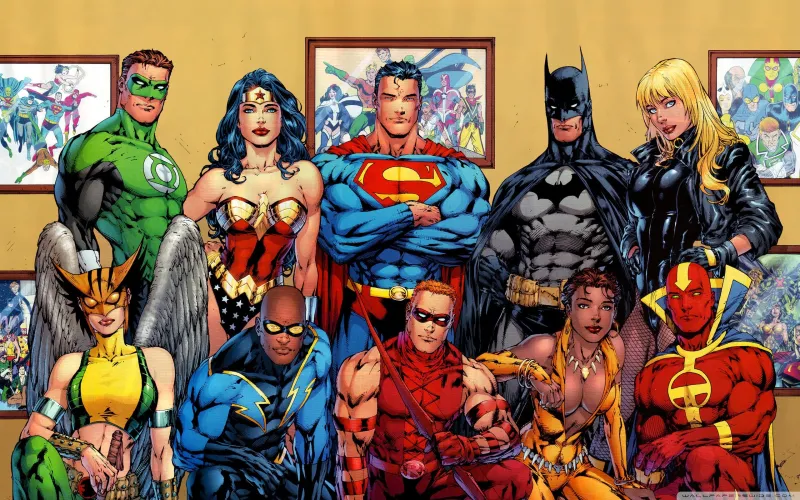
Photo: superhero transformation dramatic light effects action pose, via getwallpapers.com
If you've spent any time around tokusatsu fandom, you already know the transformation scene is sacred ground. The henshin moment — that brief, stylized sequence where an ordinary person becomes something extraordinary — is as central to the genre as the monsters themselves. Kids grow up mimicking the poses. Adults get misty-eyed rewatching them decades later.
But here's what doesn't get talked about enough: these sequences aren't just crowd-pleasing spectacle. They're doing real narrative work. And once you start seeing it, you can't unsee it.
What a Transformation Sequence Actually Is (Beyond the Obvious)
On the surface, the henshin is a practical storytelling device. It marks the shift from civilian life to hero mode. It signals to the audience that things are about to get serious. It gives kids something to imitate in the backyard. All of that is true and none of it is the interesting part.
What makes transformation sequences genuinely fascinating is how much they compress into a short window of time. A well-crafted henshin isn't just showing you that someone is becoming a hero — it's showing you who they are while it happens.
Take Kamen Rider. Across the franchise's decades-long run, the transformation sequences have functioned almost like thesis statements for each series. The dark, almost violent transformation of Kamen Rider Ryuki tells you immediately that this story is going to be morally complicated. The theatrical, almost performative henshin of Kamen Rider W — where two people literally combine into one body — communicates the show's central theme before a single line of dialogue explains it. The sequence does the work.
That's not an accident. These sequences are designed with intention.
Character in Motion
One of the most underrated functions of the transformation scene is character expression. The way a hero transforms often reflects something essential about their personality, their emotional state, or their relationship to their powers.
In Super Sentai series, team transformations are especially interesting in this regard. Watch how individual team members move during the sequence. Some are confident and fluid; others are stiff or uncertain. In longer-running series, you can actually track character growth through subtle changes in how a hero carries themselves during the henshin — a nervous rookie transforms differently by the season finale than they did in episode one.
This is subtle stuff, and it works largely because tokusatsu has always understood something that Western superhero media often misses: the moment of becoming a hero is as dramatically significant as what the hero does afterward.
Think about how Marvel handles this by comparison. Iron Man suiting up is cool, and the films have had fun with it — but it's fundamentally a logistics sequence. It's showing you the tech. The character of Tony Stark is expressed in his quips, his relationships, his choices. The suit-up itself is mostly neutral. It doesn't tell you much about who Tony is in that moment.
A henshin sequence, by contrast, is almost always about the character wearing the suit.
Emotional Anchors and Narrative Beats
Here's where things get really interesting. In the best tokusatsu series, transformation sequences function as emotional anchors — moments the audience can hold onto during complex or emotionally demanding storylines.
Kamen Rider Build is a great example. The series deals with heavy themes: war, political manipulation, identity, sacrifice. It's a lot. But Sento's transformation into Build — accompanied by a specific musical theme and a ritualistic mixing of bottles — becomes a reliable touchstone. Every time you hear that music and see that sequence begin, there's a Pavlovian comfort response, even when everything else in the narrative is falling apart.
That's not just nostalgia. That's craft. The writers understood that giving audiences a stable, recognizable ritual in the middle of chaos is a powerful emotional tool. The transformation sequence becomes a promise: this character is still fighting. This story isn't over.
When a transformation sequence is altered — shortened, corrupted, interrupted — it registers as a narrative event. Fans who've watched enough tokusatsu know that a broken henshin is a sign that something is very wrong. The sequence has accumulated enough meaning that its disruption carries dramatic weight.
The Gateway Effect
Talk to tokusatsu fans who got into the genre later in life — particularly American fans who didn't grow up with Power Rangers as their primary entry point — and you'll hear a version of the same story over and over. They stumbled across a clip. Usually a transformation sequence. And something about it hooked them.
There's a reason for that. These sequences are designed to be immediately legible even without context. You don't need to know who Kamen Rider Decade is or what his deal involves to feel the impact of his transformation. The music, the visual language, the sheer theatrical commitment of the thing — it communicates something even to a first-time viewer.
For a lot of American fans, that first clip is a gateway drug. The sequence creates a question — what is this, and why does it feel so different from what I grew up watching? — that sends them down a rabbit hole they never fully climb out of.
Fans in online communities frequently describe this exact experience. A YouTube recommendation algorithm drops a Kamen Rider or Super Sentai clip in their queue, they watch a transformation sequence with no context, and suddenly they're three seasons deep into a franchise they'd never heard of a week earlier.
What Western Superhero Media Could Learn
This isn't a knock on Marvel or DC — both have produced genuinely great superhero content. But it's worth asking why the transformation moment, the suit-up, the moment of becoming, tends to be treated as a technical sequence rather than a narrative one in Western productions.
Part of it is probably budget logic. Extended transformation sequences cost money, and Western studios tend to justify that cost through spectacle rather than character work. The result is sequences that are visually impressive but emotionally neutral.
Tokusatsu has historically operated on much smaller budgets than a Marvel blockbuster, which might actually be part of why the transformation sequences developed such narrative density. When you can't rely on pure visual scale, you have to make every second mean something.
The irony is that some of the most emotionally resonant superhero moments in recent memory have been transformation-adjacent scenes that borrowed from this instinct — the "I am Iron Man" moment, the Captain America elevator scene, Billy Batson saying "Shazam" for the first time. These work because they're about character, not just mechanics.
Tokusatsu figured that out decades ago. It built an entire genre around it.
Why It Matters
The henshin sequence is easy to dismiss as a marketing tool — a flashy, repeatable moment designed to sell toys and keep kids engaged. And sure, that's part of what it is. There's no pretending otherwise.
But the best transformation sequences in tokusatsu history are doing something genuinely sophisticated. They're compressing character, theme, and emotional state into a few seconds of stylized action. They're creating narrative anchors that the rest of the story can pull against. They're building a ritual that audiences invest in — and that investment pays dividends when the story decides to subvert or honor it.
That's not spectacle. That's storytelling. And it's one of the things that makes tokusatsu, even after all these decades, one of the most interesting and underappreciated genres in the world.