Louder Than Ever: How English Dub Culture Is Reshaping the Anime Industry From the Outside In
Let's be honest — most of us thought the sub-vs-dub wars were behind us. We'd moved past the days of arguing over 4Kids edits and mispronounced character names in comment sections. The fandom had matured. People had opinions, sure, but it felt like we'd reached an uneasy peace.
Then 2025 happened, and suddenly everyone has feelings again.
Except this time, the conversation is different. It's not just about which version sounds better. It's about creative ownership, cultural fidelity, industry economics, and — maybe most surprisingly — who actually gets to decide what anime comes to the West in the first place.
What Changed, Exactly?
For most of anime's English-language history, dubbing was reactive. A show would blow up in Japan, get licensed, and studios like Funimation or Viz would scramble to produce an English version for American audiences. Voice actors were cast, scripts were adapted, and the finished product shipped out — usually months or even years after Japanese fans had already moved on.
That pipeline still exists, but it's been quietly disrupted by a few major shifts happening all at once.
Streaming changed the speed of everything. Platforms like Crunchyroll, Netflix, and Hidive are now commissioning simultaneous dub productions — meaning English casts are recording while shows are still actively airing in Japan. That compression of the timeline has forced English localization teams to develop a more sophisticated, real-time relationship with source material. And it's raised the stakes considerably when something gets lost in translation.
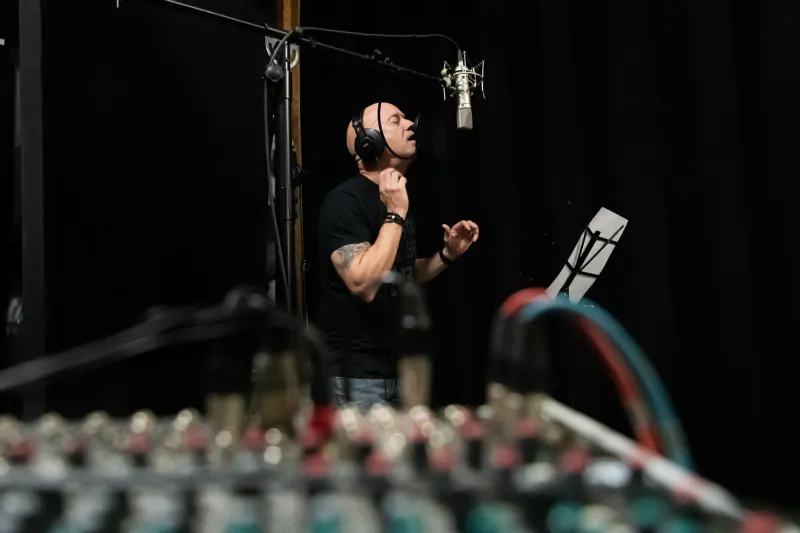
At the same time, the English voice acting community itself has leveled up. A generation of talent that grew up watching anime is now behind the mic, and their cultural literacy shows. Names like Zeno Robinson, Xanthe Huynh, and Alejandro Saab aren't just delivering lines — they're building dedicated followings, engaging deeply with fanbases on social media, and bringing a kind of performance intentionality to roles that older generations of dub work sometimes lacked.
And fans notice. They really, really notice.
The Authenticity Argument Gets Messier
Here's where things get thorny. As English dubs have gotten better, the discourse around cultural authenticity has gotten louder — not quieter.
One camp argues that an exceptional English dub is a legitimate artistic interpretation in its own right. They'll point to productions like Cowboy Bebop's classic dub or more recent work on shows like Dungeon Meshi, where the English cast brought genuine warmth and specificity to characters that resonated deeply with Western audiences. For this group, a great dub isn't a compromise — it's a translation in the fullest sense of the word.
The other camp pushes back hard. They argue that no matter how skilled the English performance, certain things — comedic timing rooted in Japanese speech patterns, honorifics that carry social weight, regional dialects that signal character class or personality — simply cannot survive the crossing intact. For them, every dub is a version of the story, not the story.
Both sides have real points. And both sides are increasingly frustrated that the other won't just admit it.
What's new in 2025 is that this debate has leaked out of fandom spaces and into actual industry conversations. Localization directors are getting interviewed in mainstream entertainment outlets. Voice actors are going on podcasts to talk about the philosophy of adaptation. The argument has professionalized, which means it's also gotten louder and more entrenched.
When the Dub Drives the Deal
Perhaps the most genuinely surprising development in recent years is how much influence English-language reception is now having on what gets adapted at all.
Streaming platforms don't just license anime — they greenlight it. And when a major platform is putting up co-production money, the expected performance in English-speaking markets becomes part of the calculation. That means the perceived dubability of a property — how well its characters, humor, and themes will translate for American audiences — is now a factor in which projects move forward.
This is a legitimately new power dynamic, and it's making some people in the Japanese industry uncomfortable. There are real concerns, particularly among manga artists and original creators, about whether this kind of market-driven filtering is subtly reshaping what kinds of stories get told. If a deeply culturally specific story is seen as a harder sell for Western dubbing, does it get passed over in favor of something more universally legible?
Those concerns aren't hypothetical. They're conversations happening in production meetings right now.
The Platform Wars Have a Localization Front
Competing streaming services have also developed notably different philosophies around how they approach English dubs, and those differences are starting to matter to consumers in ways they didn't before.
Some platforms prioritize speed, pushing out dubs quickly to capture the conversation around currently airing shows. Others prioritize quality over turnaround, taking more time to cast carefully and allow for more nuanced script adaptation. And a few have started experimenting with what you might call cultural annotation — keeping honorifics and certain untranslated terms intact while adding contextual notes or glossaries for Western viewers who want to engage more deeply.
None of these approaches is universally popular. Fans who want dubs fast resent slow rollouts. Fans who care about fidelity resent rushed productions that flatten characters. And fans who want full immersion sometimes resent the hybrid approaches as half-measures.
The platforms are essentially running competing experiments in real time, and fandom is the test group — whether they signed up for that role or not.
So Where Does That Leave Us?
If there's an honest takeaway from where the English dub conversation sits in 2025, it's this: the quality bar has genuinely risen, the stakes have genuinely increased, and the fandom is genuinely divided in ways that can't be reduced to nostalgia or elitism.
English voice acting is no longer a secondary concern or a consolation prize for fans who don't want to read subtitles. It's become a legitimate creative and commercial force — one with real influence over what anime gets made, how it reaches American audiences, and what the global anime industry prioritizes going forward.
That's worth taking seriously, even if you personally will always click the Japanese audio track first.
The dub wars never ended. They just grew into something bigger than any of us expected. And honestly? That might be exactly what this fandom needed to keep the conversation interesting.