Tokyo's Creative Zip Codes: The Real Neighborhoods Powering the Anime Industry
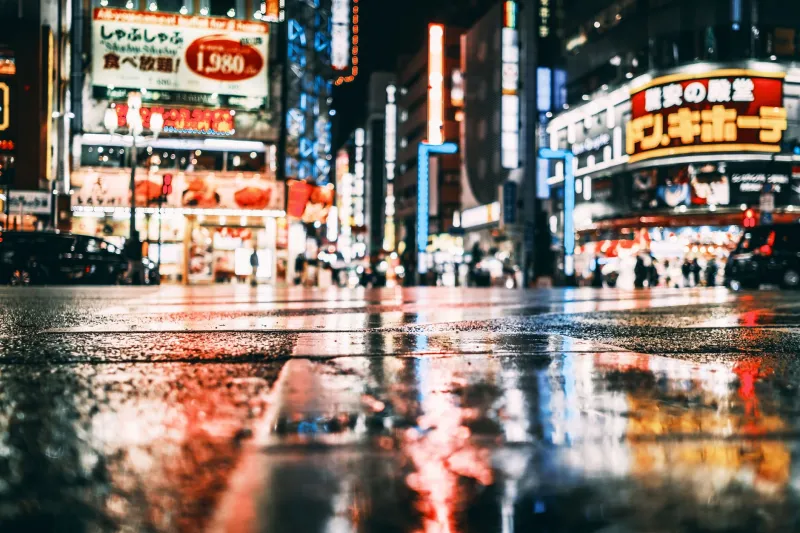
If you've ever wondered why our site is called Shinjuku Sentai, here's part of the answer: Shinjuku isn't just a cool-sounding name. It's a real place — a dense, electric ward in central Tokyo that sits at the intersection of commerce, nightlife, and creative industry in ways that are almost impossible to overstate. And while anime fans in the US tend to think of the medium as something that falls out of the sky fully formed, the truth is that it comes from somewhere very specific. It comes from neighborhoods. From commutes. From the particular way that a city organizes its creative talent.
Let's talk about the real geography behind where anime gets made — and why it matters more than you'd think.
The Cluster Effect Is Real
Anyone who's studied how creative industries work knows about clustering. Hollywood isn't spread evenly across the US — it's concentrated in a few square miles of Los Angeles. Nashville's music industry isn't scattered across Tennessee. The same principle applies to anime production in Tokyo, and it's been operating this way for decades.
Shinjuku, Suginami, Nerima, and Nakano form what you might loosely call the anime production belt. Suginami Ward alone has historically housed more animation studios per square mile than almost anywhere else on earth. At various points, it's been home to major players like Production I.G, Madhouse, and Brains Base, along with dozens of smaller subcontracting studios that handle everything from key animation to background art. The proximity isn't accidental — it makes collaboration faster, handoffs easier, and the informal exchange of ideas constant.
When a key animator finishes a cut and needs to pass it to an in-between animator, being in the same neighborhood (or even the same building) compresses the production timeline significantly. In an industry notorious for brutal deadlines and paper-thin margins, that geographic efficiency is genuinely meaningful.
Shinjuku as the Nervous System
While Suginami might be the production floor, Shinjuku functions more like the industry's nervous system. Major talent agencies, publishing houses, and media conglomerates cluster around Shinjuku Station — one of the busiest transit hubs in the world — making it a natural meeting point for the suits, the creatives, and everyone in between.
The ward's density also means that the informal networking that drives so much of the entertainment business happens constantly and organically. Anime directors, voice actors, manga editors, and game designers all end up at the same izakayas, the same convenience stores, the same late-night ramen spots. The industry's social fabric gets woven in those moments, and the ideas that come out of those conversations eventually end up on screen.
It's worth noting that Shinjuku is also home to a significant concentration of manga publishers and their editorial offices. Since so much anime originates as manga adaptations, having studios physically close to the source material — and the editors who shepherd it — creates a feedback loop that shapes what gets adapted, how faithfully, and how quickly.
What Gets Lost When Distance Grows
Here's where things get genuinely interesting for fans paying attention to the industry's current moment: the traditional geographic concentration is under real pressure.
Rising real estate costs in central Tokyo have pushed some studios further out. The COVID-19 pandemic forced a rapid, unplanned experiment in remote production that the industry is still processing. Streaming money from Netflix, Crunchyroll, and Amazon has created new financing structures that don't always require the same physical proximity that the old broadcast model demanded. And there's growing offshore production — animation work being contracted to studios in South Korea, China, and Southeast Asia — that complicates the traditional Tokyo-centric model.
Some industry observers argue that this diffusion is healthy, democratizing access to production work and reducing the brutal working conditions that Tokyo's anime labor market has long been criticized for. Others worry that something gets lost when the informal, face-to-face creative culture of Suginami and Shinjuku gets replaced by Zoom calls and file transfers.
The honest answer is probably that both things are true at once.
The Neighborhood Shapes the Story
Here's the part that should matter most to fans: the physical environment that animators and directors inhabit genuinely influences what they make.
When the streets of Shinjuku, with its layered neon and vertical density, show up in anime — in works like Durarara!!, in the urban fantasy aesthetics of countless supernatural action shows, in the lonely late-night cityscapes that populate so many slice-of-life series — that's not just art direction. That's animators drawing from their daily commutes. The specific texture of Tokyo's entertainment districts, the way light moves through narrow streets between tall buildings, the particular energy of a neighborhood that never fully sleeps — all of it seeps into the visual language of anime in ways that are hard to quantify but easy to feel.
For US audiences watching these shows from thousands of miles away, there's something meaningful about understanding that the atmosphere you're responding to is rooted in a real place. The aesthetic isn't manufactured in a vacuum. It's a document of a city.
Why This Should Change How You Watch
None of this means you need to become an expert in Tokyo urban planning to enjoy anime. But there's a kind of depth that opens up when you start thinking about the medium as a product of place.
When a show captures something specific about urban loneliness, or the particular social dynamics of dense city living, or the way that a massive metropolis can feel simultaneously overwhelming and anonymous — there's a reason it feels real. The people making it live it. The neighborhoods that inspired it are the same neighborhoods where the episodes get drawn, colored, and finished.
Shinjuku Sentai takes its name from a place that represents exactly this kind of layered creative energy. It's a ward that holds contradictions — corporate and underground, traditional and relentlessly modern, globally connected and distinctly local. That's also a pretty good description of anime itself.
The next time you're deep in a show and something about the background art or the urban setting hits different, take a second to wonder where exactly that was drawn. Odds are better than you'd think that someone in a Suginami studio pulled it straight from memory.